

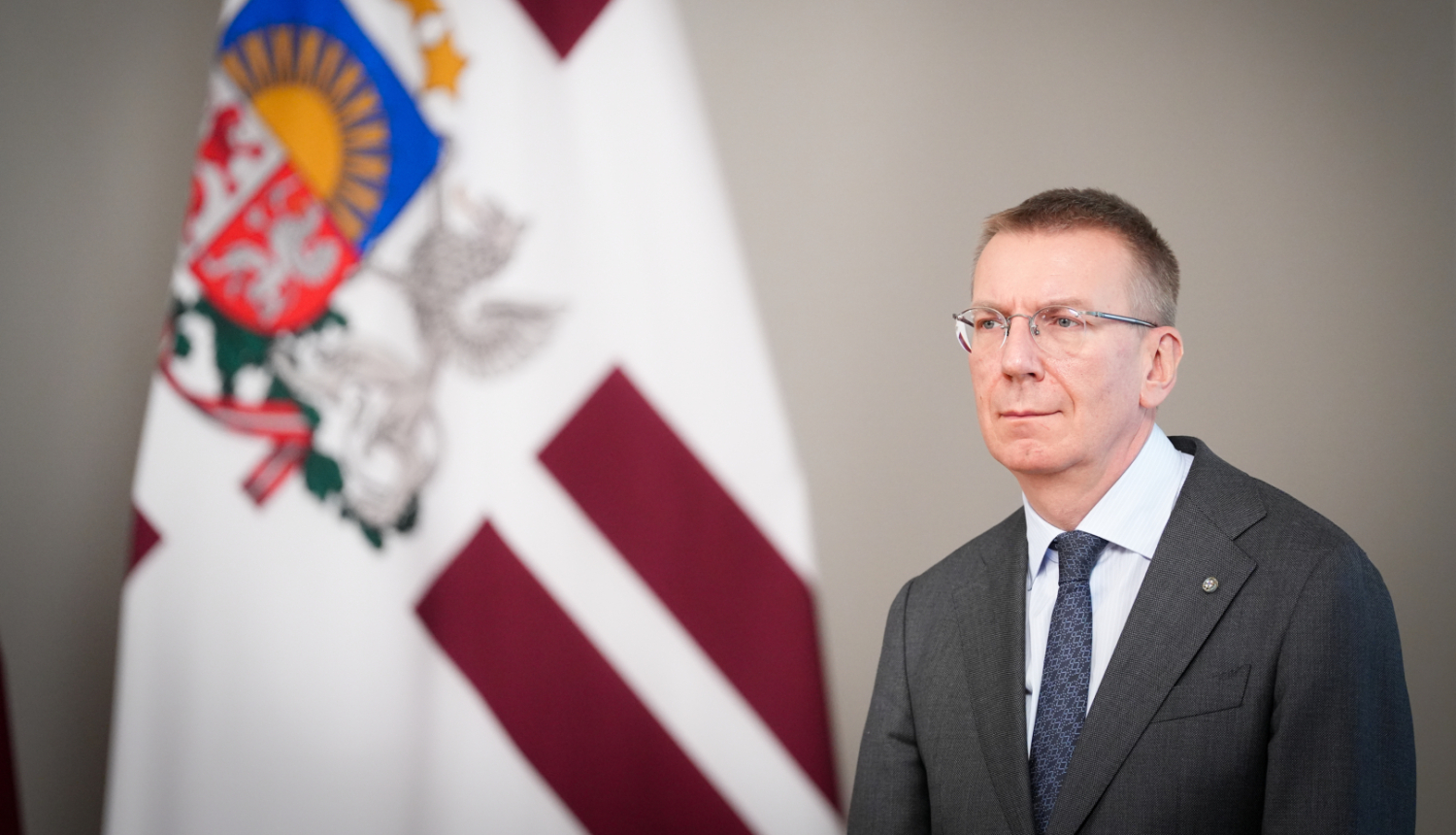
President Edgars Rinkēvičs has reviewed the information provided on 18 March this year by the European Public Prosecutor’s Office regarding possible violations in information technology procurement and their potential impact on the 2026 Saeima election process.
“Elections are the principal mechanism through which the people of Latvia exercise their sovereign rights as set out in Article 2 of the Constitution of the Republic of Latvia. In a democratic state, public authority is legitimate only if it derives from the will of the people, freely expressed in elections. Elections are free when voters are able to form their views independently, express their will, and challenge any violations of electoral procedures.
In order for voters to properly exercise their rights, the state has a duty to ensure the electoral process. Accordingly, the high-quality organisation and management of elections is an essential precondition for free elections, leaving no room for doubt regarding their security or the credibility of the results. Free, uninfluenced and transparent elections are a cornerstone of a democratic state.
The information provided last week by the European Public Prosecutor’s Office on possible violations in IT-related procurement within public administration raises questions about the security of the electoral process and vote counting in this year’s Saeima elections.
Latvian society must receive unequivocal assurance that the 2026 Saeima elections will be conducted in a fair, transparent and secure manner, eliminating any doubts about the potential impact of shortcomings in information technology solutions on the election results. I therefore call on the responsible authorities not to delay and to take a decision now to carry out vote counting in the 2026 Saeima elections manually, that is, for votes to be counted by hand by members of election commissions, rather than relying on potentially flawed information technology solutions. I will propose that the issue of the conduct of elections, related threats and external influence be discussed at the meeting of the National Security Council in April of this year,” stated President E. Rinkēvičs.