



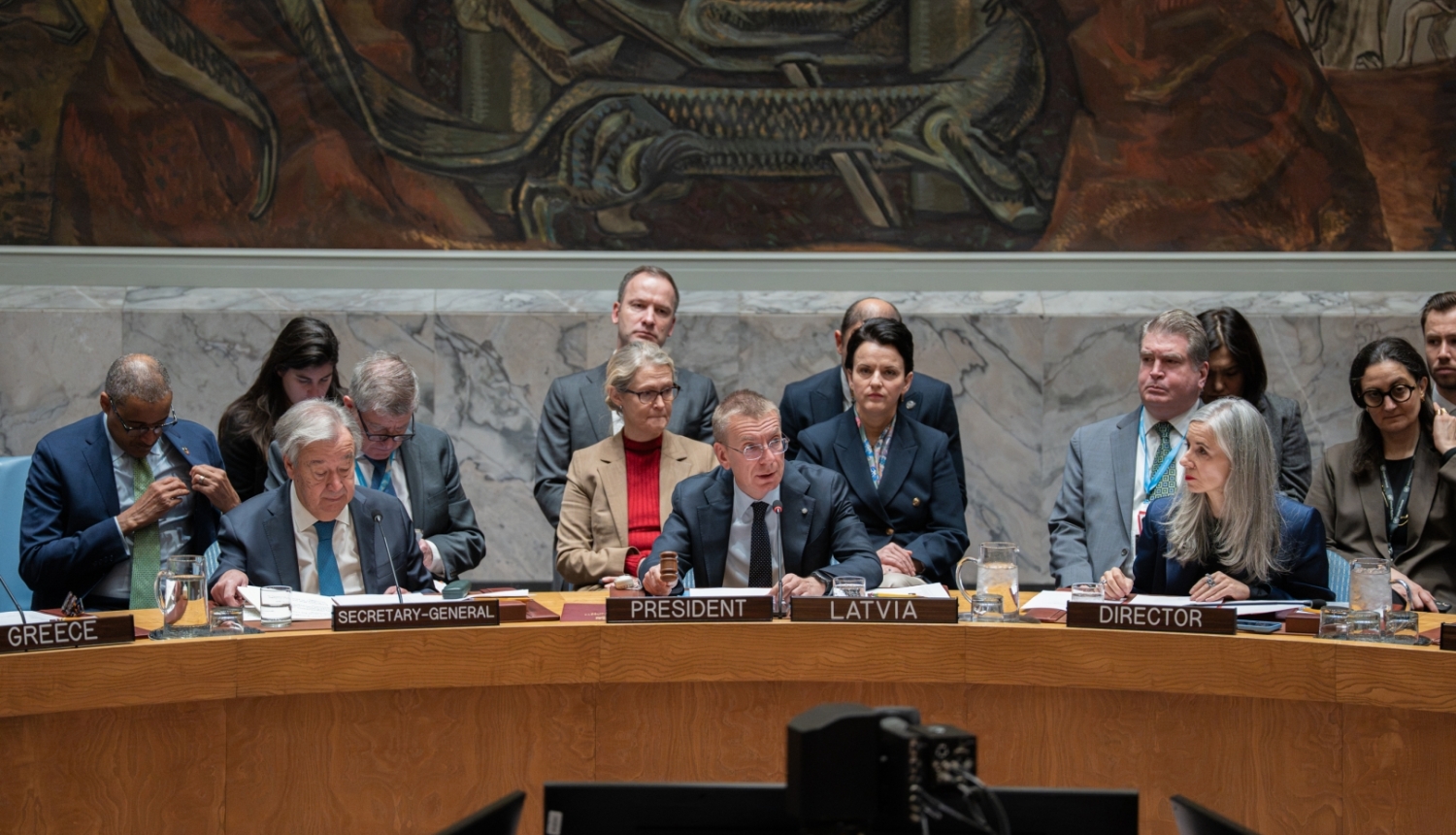
Secretary-General,
Excellencies,
distinguished Council members,
I thank His Excellency Secretary-General António Guterres for his remarks. I appreciate the continued advocacy for responsible development of new technologies.
I also thank Ms Spoljaric, Ms Russo and Mr Humphries for sharing their valuable insights.
Excellencies,
Technology has always brought both opportunities and risks. It can help us detect emerging threats. It can help us make better decisions. It improves lives.
But is has also a darker side.
We live in a world where cyberattacks can shut down refrigerators in supermarkets. Disrupt blood banks. Where AI exposes vulnerabilities faster than we can fix them. Where “data grooming” becomes a powerful tool for disinformation. Where autonomous weapons can identify and strike at speeds that leave little room for human judgement.
Ladies and gentlemen,
These developments have an impact on international peace and security. The Security Council’s responsibility is to maintain it. That is why we are here today at this table.
While the technologies are new, the fundamental questions they raise are not.
New technologies do not mean abandoning established principles. Respect for sovereignty remains essential. So does the prohibition of the use of force and the protection of human life. These principles are no less important in a world transformed by technology.
Our challenge is not simply to keep pace with new technologies. We must stay ahead of the risks. We must shape their future, rather than react to their consequences.
The newly established Council’s Informal Expert Group on technology, peace and security, championed by Latvia and Greece, is a step towards these efforts.
Distinguishes representatives,
Allow me to outline three points.
First, new technologies should support our informed decision-making. They should not replace human judgement.
Technology can help us understand a conflict. It cannot replace the political will to resolve it. It can inform negotiations, but it cannot build trust between adversaries.
We must put safeguards in place. Intelligent systems must remain firmly under human control. It must serve humanity, not the other way around. After all, none of us wants to see the Terminator movies become a reality.
This means testing models before they are released. Independent evaluation and shared reporting of incidents do matter.
Latvia supports the leaders’ declarations “Call for Control of Frontier AI Models” and the “Paris Call for AI Safety and Security”. Both reflect growing concerns about AI-related risks and the need for collective action.
Second – technology should support conflict resolution. Not accelerate violence. It can help detect warning signs. Monitor ceasefires and help mediate. It can give better tools to the UN peace operations. That means a change of mindset across the UN.
We have an opportunity to use technology for peace, stability and conflict resolution. More opportunity for diplomacy. More opportunity for cooperation.
Every country has its own strengths and expertise to offer. Latvia has a rapidly developing counter-drone technology sector. These technologies can protect lives in conflict zones. Other countries bring expertise in tackling different threats. By combining our strengths, we can better address our shared security challenges.
Cooperation is particularly important for smaller states and countries with limited technological resources. They must not be left behind or excluded from decisions that affect their security.
Third, international law applies, regardless of the weapon or technology used. Protecting human life is our shared responsibility.
Technology may put greater distance between those who cause harm and their victims. But it must never put greater distance between their actions and accountability. Ultimately, it is states and people, not algorithms, that must answer for their decisions.
Dear Council Members,
Technology will evolve. We should not stop its progress. Whether it brings more security or more instability – it is our choice.
We must shape the areas where the new technologies will matter most. By investing in foresight. Sharing information on incidents. Building the tools we will need.
Thank you!
