



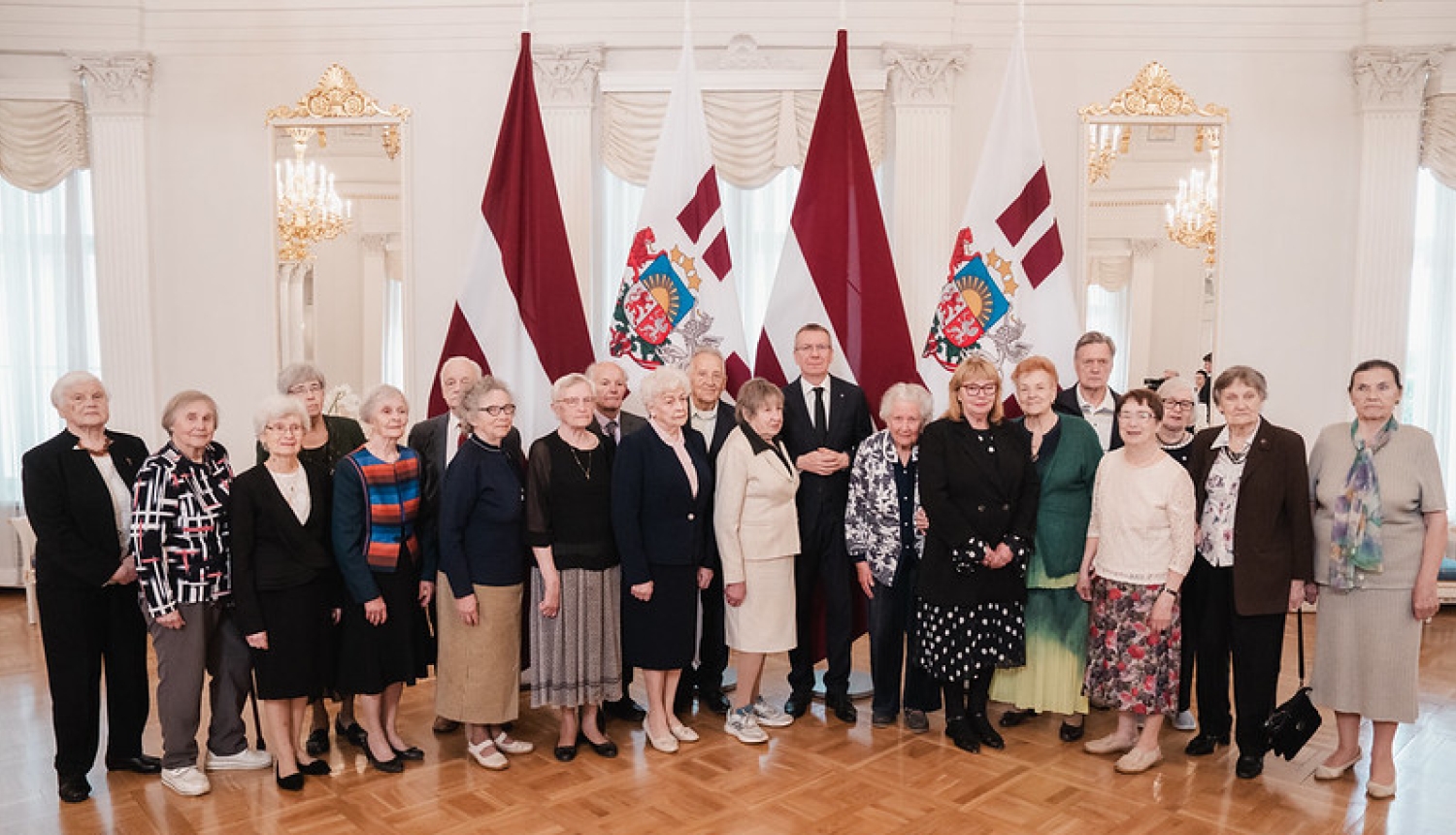
Ladies and gentlemen,
We would normally begin by addressing you as “honoured survivors of repression”, but today I would prefer to say: dear friends!
It is a deeply moving moment to meet you here at Riga Castle on 14 June, eighty-five years after the first large-scale deportations and repression. In the history of our nation, there were two major waves of repression: one in 1941 and the other in 1949. These were the two periods when our people suffered the greatest losses, both through war and repression.
Eighty-five years ago, the Stalinist communist regime sought to destroy our intelligentsia, our officer corps, and the very finest representatives of our nation and society. It was a tragedy whose consequences, I believe, are still felt today. Many of those individuals from the creative intelligentsia, business and public administration, and their descendants, would have been of immense value to us.
It is a great honour for me to meet you, those who endured exile and deportation to Siberia. At that time, you were children, and childhood memories are often the most vivid of all. They remain far clearer than many events that occur later in life. First, I would like to express my sincere gratitude to Mrs Geka. Before coming here today, I revisited the documentary “Children of Siberia” and reread several life stories. These testimonies were recorded many years ago, between 2000 and 2007, when many survivors were still with us and were able to recall those events in great detail.
You remember those events, and I wish to thank you for sharing your memories, because nothing is more dangerous than forgetting. Nothing is more dangerous than silence. If we remain silent today, if we fail to remember what happened to us, then such events may one day be repeated. We may lose our vigilance. And right now, vigilance is incredibly important. It is essential that we strengthen our defence, including the resilience and strength of spirit of our nation. This is only possible through remembrance, through the stories you continue to tell.
Therefore, I want to sincerely thank you for coming here today and for everything you do every day by sharing your experiences with your families, with younger generations, preserving these stories for the future through video recordings, memoirs, and interviews.
Thank you! We will surely meet again later today at the Museum of the Occupation, and I would very much welcome the opportunity to speak with you now and to listen to your stories. My thanks also go once again to all those who help preserve these invaluable testimonies.
